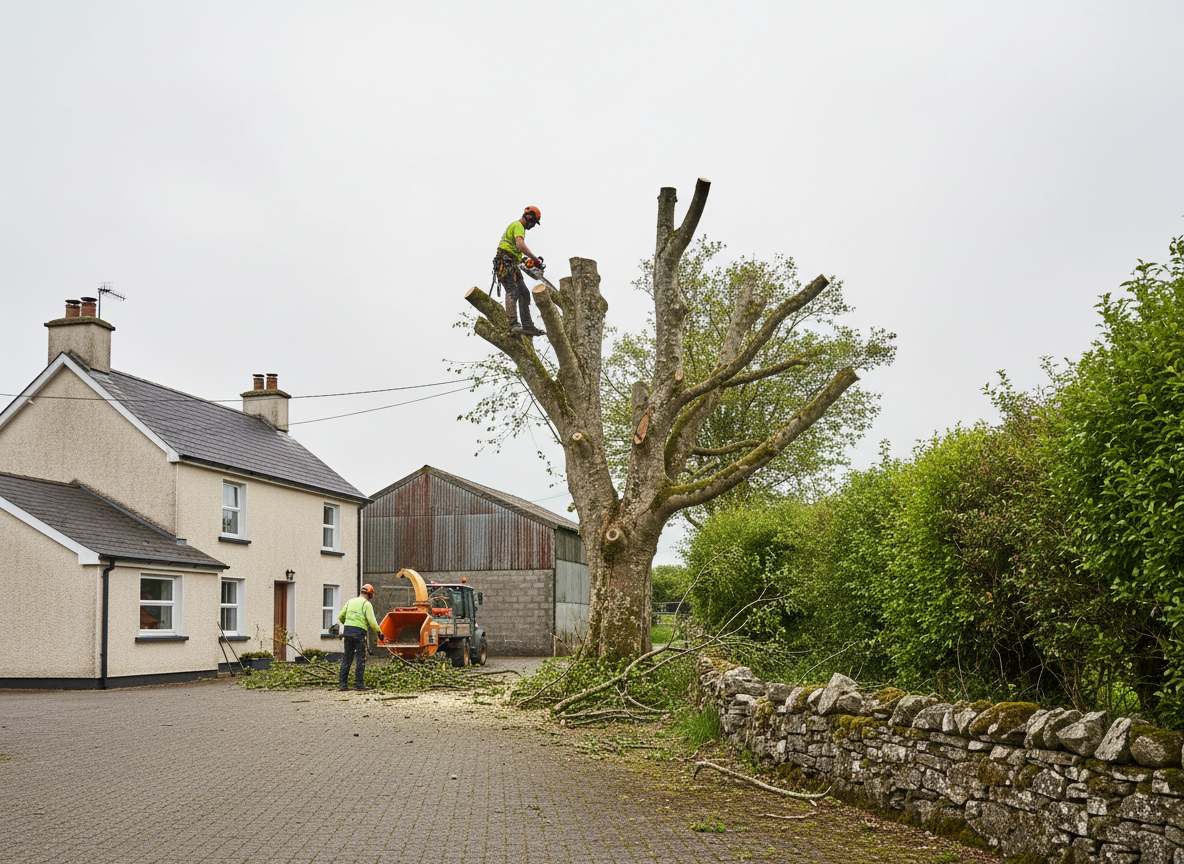
Tree surgery in this part of Ireland often involves dealing with trees that have grown in persistently damp conditions and have been battered by Atlantic storms. Shallow rooting and wind exposure mean limbs can fail without obvious rot, especially on older estates and farm boundaries where soil depth is limited.
Work is planned around access restrictions common to rural lanes, small gardens in towns like Ballina or Boyle, and fields with soft ground after weeks of rain. Cuts are made to British Standard 3998 so the remaining tree can close wounds naturally in the damp climate rather than inviting further decay.
Customers request help when branches overhang roofs, block light from south-facing rooms, or interfere with power lines and farm machinery. On agricultural land, low branches can damage fencing or allow livestock to strip bark during winter.
Every job starts with a site visit to assess lean, crown weight and ground conditions before any cuts are made. This prevents surprises once the crew is on site with ropes and a chipper.
Technician insight
Tree surgery on exposed or confined sites may require a different approach from work on an open rural property, depending on access and surrounding structures.
Tree Surgery Services We Offer
✓Crown Reduction
Shortening the overall height and spread of a tree while keeping its natural shape, useful where branches reach over roofs or wires.
✓Pollarding
Regular cutting back to the same points on the trunk or main limbs, often used on roadside trees in towns to control size and regrowth.
✓Deadwood Removal
Cutting out dead, dying or damaged branches that could fall in high winds, particularly important on mature beech and ash near houses.
✓Sectional Dismantling
Taking a tree down in controlled pieces using ropes and rigging when straight felling is impossible due to buildings, fences or slopes.
✓Storm Damage Clearance
Removing split limbs or hung-up branches after gales, making the site safe before further work begins.
✓Ivy Severance and Removal
Cutting ivy at the base and stripping it from the trunk where it adds weight and traps moisture against the bark.
How it works
- 1
Site Assessment
Walk the ground, check access, note nearby structures and overhead lines, and decide the safest method for the tree in question.
- 2
Method Planning
Choose cuts, rigging points and drop zones so timber and brash can be handled without damage to lawns, walls or livestock.
- 3
Execution
Carry out the agreed work, chipping smaller material on site where space allows and stacking larger logs for the customer.
- 4
Clearance and Finish
Remove all arisings or leave them stacked as requested, then check the remaining tree for balance and any follow-up cuts needed.
Pricing
Final cost depends on tree height, diameter, lean, access and whether timber is left on site or taken away.