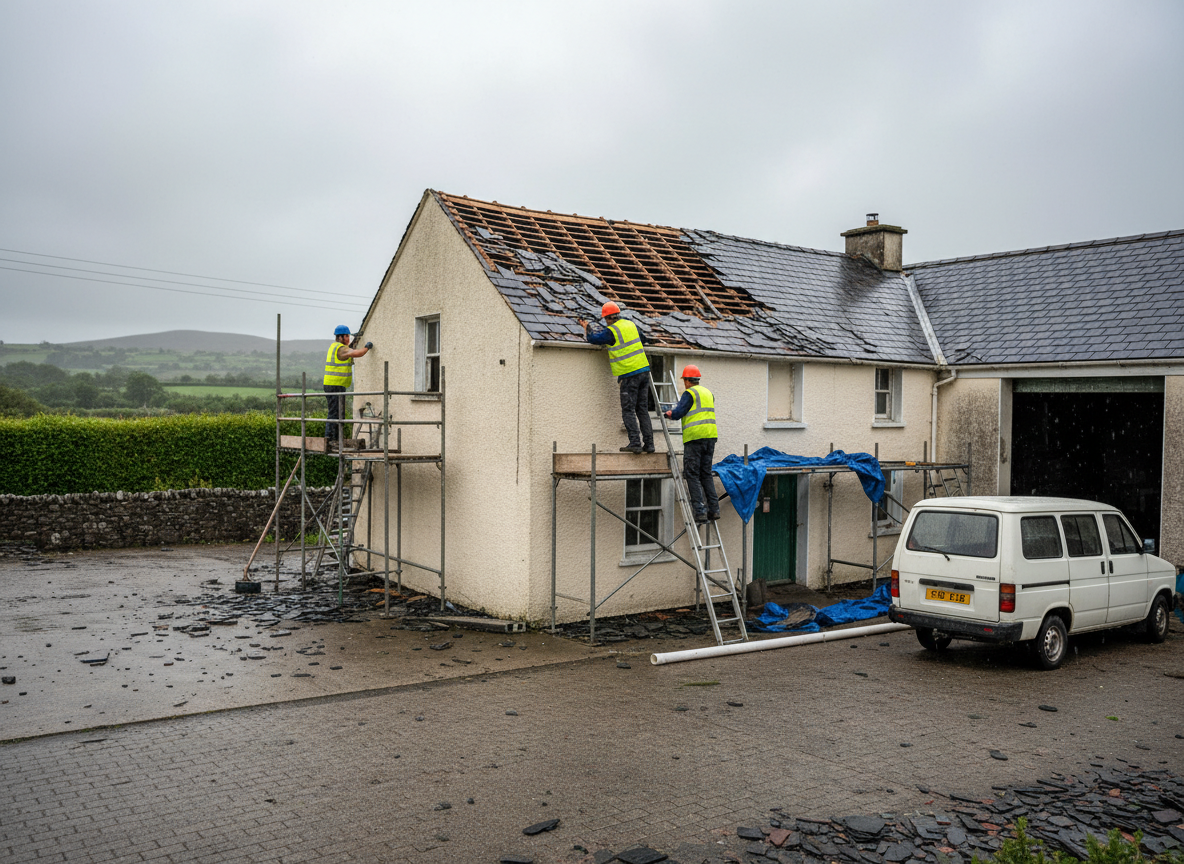
West of Ireland roofs face repeated battering from wind-driven rain and salt-laden air. This leads to lifted slates, cracked ridge tiles, displaced lead flashings and blocked gutters that allow water to penetrate older properties. Agricultural sheds and outbuildings often suffer the same issues but with less frequent inspection, so damage can progress unnoticed until interior damp appears.
Repairs typically begin with safe access and a thorough check for hidden water ingress points. Work may include replacing individual slates or tiles, repointing ridge and hip tiles with suitable mortar, renewing lead soakers and step flashings, clearing debris from valleys and gutters, and treating moss or algae growth that holds moisture against the roof surface. On commercial or farm buildings the same principles apply but often involve larger areas and different access considerations.
Scope depends on roof age, pitch, existing materials such as natural slate or concrete tiles, and how much of the roof is affected. Coastal properties in areas exposed to prevailing south-westerlies usually require more frequent attention to flashings and fixings. Residential, commercial and agricultural buildings are all served using the same core techniques, scaled to the structure.
Common Causes of Storm Damage
Persistent damp from wind-driven rain, dislodged slates on exposed elevations, and debris impact during gales are the main triggers. Older housing stock with original slates and minimal modern fixings is particularly vulnerable.
Factors Affecting Scope and Cost
Roof height, pitch, number of chimneys or valleys, and whether temporary weatherproofing is needed before permanent repairs all influence the work. Access to farm buildings or commercial premises can add logistical considerations without changing the core repair methods.
Technician insight
In Galway, the thing that catches most people out with Storm Damage Roof Repair is how wind-driven rain on older slate roofs gets behind loose or poorly fixed slates on the prevailing south-west elevation, especially on houses built before cavity construction became standard.
Example Situation
For example, a property may experience lifted ridge tiles after a winter storm. Inspection reveals water ingress through damaged flashing. Repairs involve replacing the tiles and renewing the lead work. This restores weather tightness without unnecessary full roof replacement.
Storm Damage Roof Repair Services We Offer
✓Slate and Tile Replacement
Individual or sectional replacement of storm-lifted or broken slates and tiles using matching materials.
✓Ridge and Hip Tile Repairs
Rebedding or repointing ridge and hip tiles disturbed by high winds, using appropriate mortar mixes.
✓Lead Flashing Renewal
Replacement or dressing of lead soakers, step flashings and apron flashings around chimneys and abutments.
✓Valley Gutter Clearance and Repair
Removal of storm debris from lead or tiled valleys followed by any necessary lining repairs.
✓Chimney Stack Weatherproofing
Repointing brickwork and renewing flashings on chimneys to prevent water entry after gales.
✓Soffit and Fascia Repairs
Fixing or replacing timber or uPVC soffits and fascias damaged by wind or falling debris.
✓Moss and Algae Treatment
Careful removal and treatment of growth that traps moisture on roofs after prolonged damp periods.
How it works
- 1
Site Assessment
Visual inspection from ground and roof level to identify damaged components and any signs of water ingress.
- 2
Temporary Protection
Installation of tarpaulins or temporary coverings where necessary to prevent further water entry.
- 3
Repair Work
Targeted replacement or reinstatement of slates, tiles, flashings and drainage elements using standard trade methods.
- 4
Final Check
Walk-through inspection to confirm weather tightness and removal of all debris and materials.
Pricing
Scope and cost depend on extent of damage, roof type, pitch, number of elevations affected and access requirements for residential, commercial or agricultural buildings.