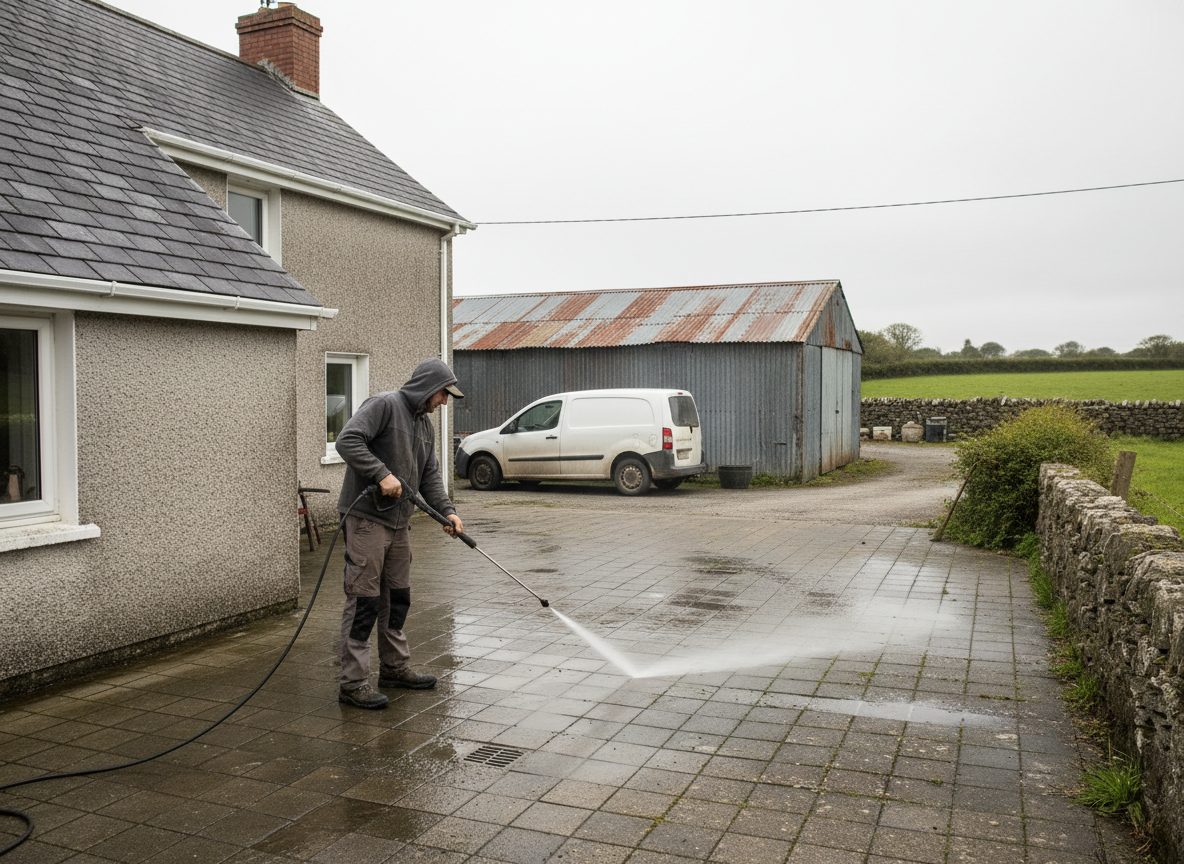
Persistent damp and wind-driven rain along the western counties encourage rapid moss and algae growth on paving, especially where surfaces stay shaded or hold water after storms. Coastal exposure in areas like Sligo and north Mayo adds salt-laden moisture that can accelerate surface staining on both natural stone and concrete flags. Regular cleaning removes this organic build-up before it becomes embedded and slippery.
Work typically begins with a thorough inspection to identify joint condition, surface type and drainage issues. Cleaning then proceeds using controlled pressure washing combined with approved biocides suited to Irish conditions, followed by clearing of debris from joints. Where needed, fresh kiln-dried sand is brushed into joints to restore stability and discourage future weed growth.
Common reasons for the service include safety concerns on slippery surfaces around homes, preparation of commercial forecourts before seasonal trade, and maintaining access routes on farms where machinery tracks mud onto paved yards. Agricultural yards in Roscommon and Leitrim often require attention after winter housing periods when slurry and organic matter accumulate.
Surface Types Commonly Treated
Natural sandstone, limestone flags, concrete pavers and block paving each respond differently to cleaning methods; over-aggressive pressure can erode softer stone edges common in older Galway properties.
Factors Affecting Scope and Cost
Extent of organic growth, total square metres, access restrictions, presence of oil or rust stains, and whether joint sand replacement is required all influence the time and materials needed on site.
Technician insight
In Galway, the thing that catches most people out with Patio & Paving Cleaning is how quickly wind-driven rain re-seeds moss on north-facing yards near the coast; older housing stock often has uneven sandstone that holds moisture longer than newer concrete, so the job always takes longer than a quick wash would suggest.
Example Situation
For example, a property may have paving that remains damp year-round due to overhanging trees and poor falls. This leads to thick algae films that make the surface slippery after rain. A methodical clean with biocide and measured pressure removes the growth and improves grip while protecting the stone edges.
Patio & Paving Cleaning Services We Offer
✓Pressure Washing of Natural Stone Paving
Controlled low-to-medium pressure cleaning of sandstone and limestone to lift surface algae without eroding edges.
✓Concrete Flag and Block Cleaning
Targeted treatment for mass-produced concrete surfaces prone to black lichen in persistently wet spots.
✓Moss and Algae Removal Treatment
Application of approved biocide followed by gentle agitation to kill and lift organic growth from joints and surface.
✓Paving Joint Re-sanding
Removal of degraded material and replacement with kiln-dried sand to restore stability and reduce weed ingress.
✓Oil and Rust Stain Treatment
Specialist spot cleaning for vehicle marks or iron deposits on driveways and yard entrances.
✓Farmyard Paving Restoration
Cleaning of concrete and stone yards used for machinery and livestock movement where mud and slurry accumulate.
How it works
- 1
Site Assessment
Walk the area to note surface type, drainage, growth density and any access limitations.
- 2
Preparation and Protection
Mask adjacent planting, move furniture and apply biocide where heavy moss is present.
- 3
Cleaning Application
Use appropriate pressure and agitation to lift dirt, algae and moss while preserving joint integrity.
- 4
Finishing and Clearance
Rinse residues, top up joints with fresh sand if required and remove all arisings from site.
Pricing
Scope and cost depend on area size, surface type, and build-up of growth.