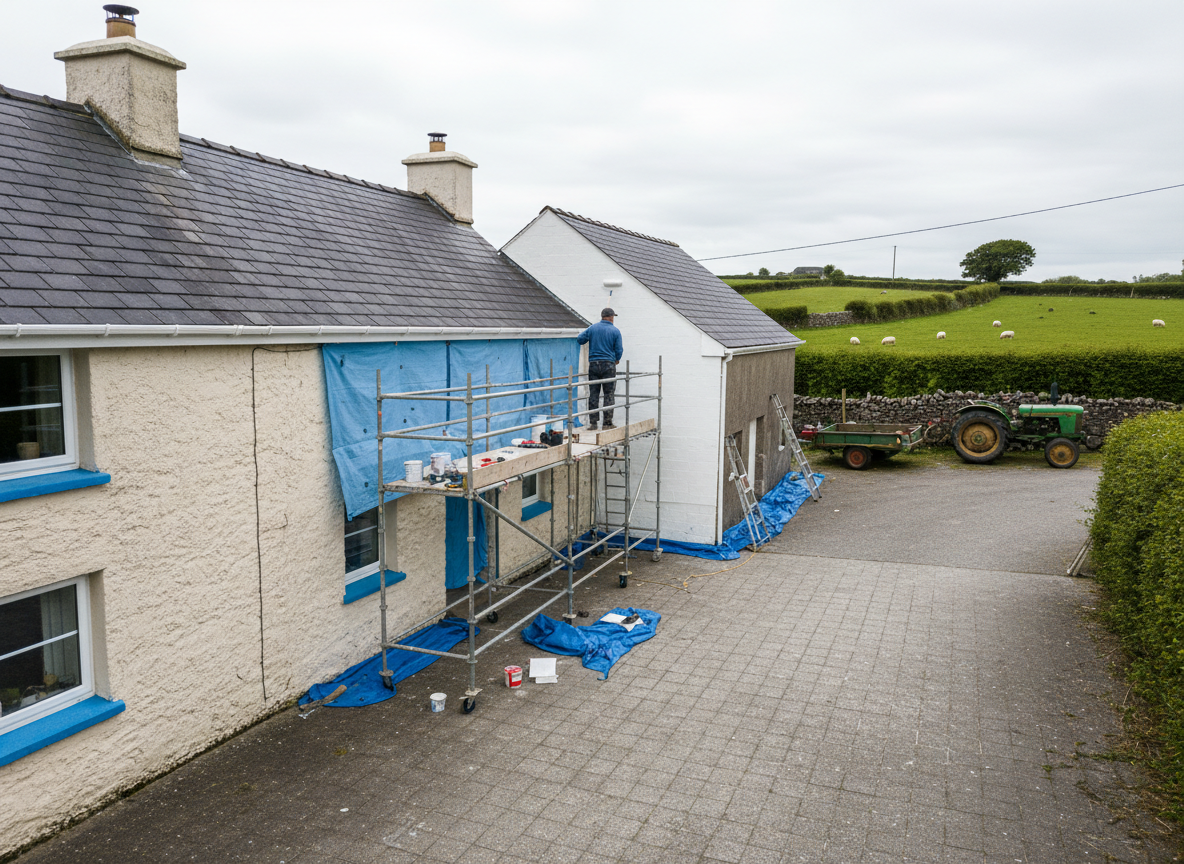
Exterior house painting on properties in the west of Ireland must account for repeated wind-driven rain, salt-laden air near the coast and long periods of damp that promote moss and algae growth. Older stone and rendered houses often carry layers of previous coatings that trap moisture unless properly prepared. Choosing the right breathable masonry paint or microporous system helps the surface dry between showers rather than blister.
Surface preparation forms the largest part of the work. Loose render, failing pebbledash and flaking paint are removed by hand or mechanical means before any new coating is applied. Timber fascias, soffits and cladding receive different treatment, usually involving scraping, sanding and application of wood primers suited to frequent wetting.
Access on many rural and coastal homes involves ladders, towers or cherry pickers because of gable ends, dormers and outbuildings. Agricultural sheds and commercial units add further considerations around livestock areas, feed stores and working yards that cannot be closed for long periods.
The finished system needs to withstand storms without peeling while still allowing the underlying masonry or timber to breathe. Local conditions mean standard exterior paints from DIY stores often fail within two winters, so specification of appropriate coatings matched to exposure levels is essential.
Common Reasons Customers Request Exterior Painting
Persistent damp patches on gables, widespread algae on north-facing walls, and timber that has started to grey and split are frequent triggers. Coastal properties also see accelerated chalking of existing paint due to salt exposure.
What the Work May Include
Preparation of masonry, render or timber; application of stabilising primers where required; two-coat systems using breathable masonry paint or wood stain; careful masking of windows, doors and rainwater goods; and tidy removal of debris at the end of each day.
Factors That Affect Scope and Cost
Property height and access difficulty, extent of surface repairs needed before painting, number of different substrate types, and whether the work covers the full house or selected elevations only.
Technician insight
In Galway, the thing that catches most people out with Exterior House Painting is older stone houses that still carry layers of non-breathable masonry paint from the 1980s; once the new coating goes on it traps the damp that was already there and you get blistering within a season.
Exterior House Painting Services We Offer
✓Masonry and Render Painting
Preparation and coating of stone, block and rendered walls using breathable exterior masonry systems suited to frequent rain.
✓Timber Cladding and Fascia Painting
Stripping, priming and finishing of timber cladding, fascias, soffits and bargeboards with microporous coatings.
✓Pebbledash and Roughcast Treatment
Cleaning, stabilisation and overcoating of existing pebbledash and roughcast finishes common on west of Ireland homes.
✓Metalwork and Rainwater Goods Painting
Preparation and painting of cast-iron gutters, downpipes, railings and metal windows to prevent corrosion in coastal air.
✓Agricultural Outbuilding Painting
Exterior painting of sheds, barns and stores on farms where access and working around livestock must be managed.
✓Coastal Property Weather Protection
Specification of higher-build coatings for properties exposed to salt spray and prevailing south-westerly winds.
How it works
- 1
Assessment and Specification
Review of all elevations, identification of substrate types and exposure levels, and selection of suitable coating systems.
- 2
Surface Preparation
Removal of loose material, cleaning of algae and moss, repairs to render or timber, and application of primers where needed.
- 3
Coating Application
Application of chosen masonry paint, wood coating or metal paint in correct conditions, usually two coats with adequate drying time between.
- 4
Final Inspection and Touch-Up
Check for missed areas, edges and junctions, followed by removal of protection and site clean-down.
Pricing
Scope and cost depend on property size, surface condition, number of substrates and access requirements.