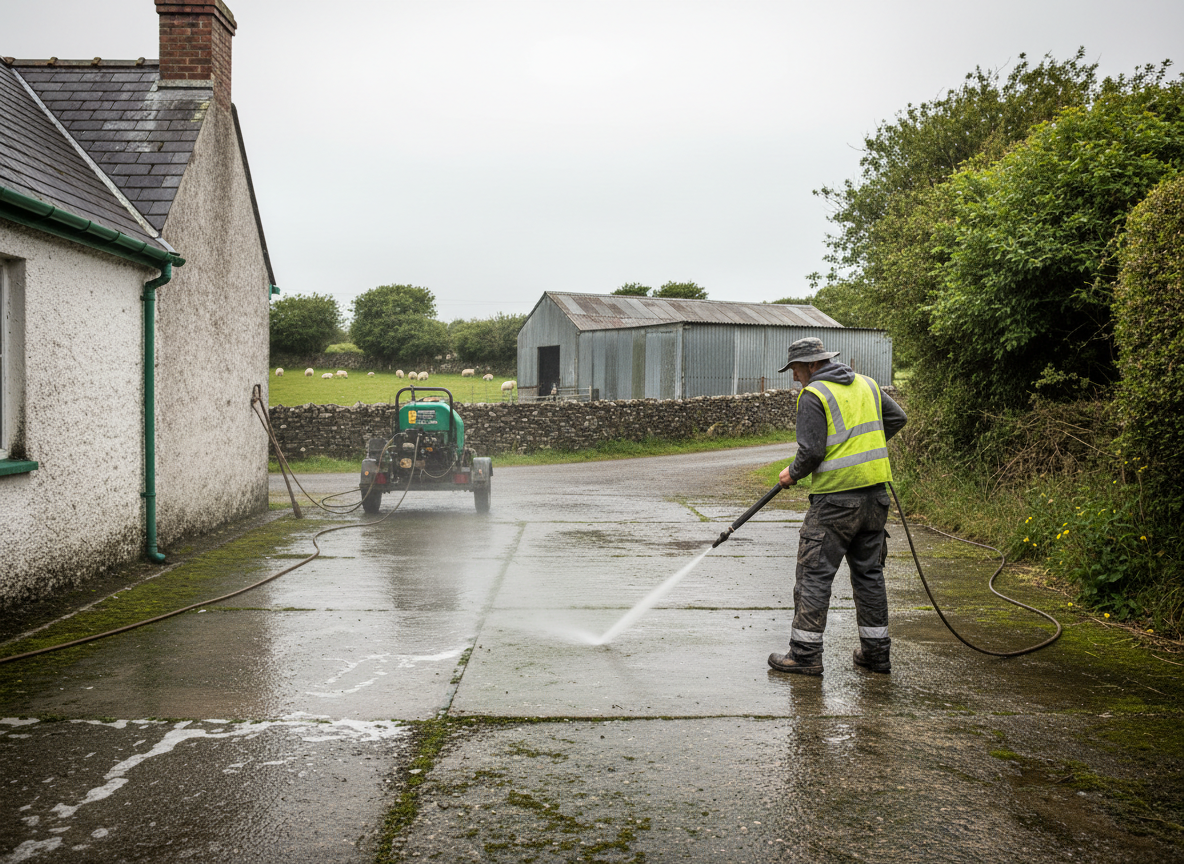
Driveways in the western counties take constant punishment from Atlantic weather. Persistent damp encourages moss and algae to colonise joints and textured surfaces, while winter storms push grit and organic matter into every crevice. Regular cleaning restores grip and prevents water from lying in low spots that later freeze and crack slabs or loosen blocks.
Common triggers for calling in a cleaner include green staining that makes surfaces slippery, oil marks from vehicles, and weed growth pushing through gravel or between paving. Agricultural yards often need attention after slurry or feed spills, while coastal properties suffer salt crusting on tarmac and concrete. Each surface type reacts differently, so the approach must suit concrete, block paving, asphalt or loose stone.
Work typically starts with a site walk to identify drainage issues, loose material and any previous sealers. Soft washing or controlled pressure is then used to lift growth without damaging the substrate, followed by targeted treatment of stains and clearing of joints. On gravel drives the process includes raking, weed removal and redistribution of stone to restore level and drainage.
Surface Types and Local Factors
Older 1970s and 1980s concrete driveways common around Galway city and the smaller towns often have open joints that trap moisture. Coastal exposure in Sligo and Mayo accelerates salt damage on asphalt edges. Agricultural properties in Roscommon and Leitrim frequently combine vehicle traffic with livestock movement, creating compacted dirt that needs different agitation from domestic moss problems.
Technician insight
In Galway, the thing that catches most people out with Driveway Cleaning is how wind-driven rain keeps the north-facing side of 1970s concrete driveways damp for weeks, letting moss recolonise the joints within a single winter.
Driveway Cleaning Services We Offer
✓Block Paving Cleaning
Removes embedded moss and restores joint sand in interlocking concrete or clay blocks.
✓Concrete Driveway Cleaning
Treats smooth or brushed finishes to lift algae films and tyre marks without etching the surface.
✓Asphalt and Tarmac Restoration
Cleans oxidised and stained tarmac surfaces while avoiding high-pressure damage to edges.
✓Gravel Driveway Rejuvenation
Rakes, weeds and redistributes stone to improve drainage and appearance on loose-stone drives.
✓Oil and Fuel Stain Removal
Targets hydrocarbon marks on concrete and block using appropriate degreasers before general washing.
✓Joint Weeding and Sanding
Clears vegetation from paving joints and replaces kiln-dried sand to reduce future growth.
How it works
- 1
Site Assessment
Walk the driveway to note surface type, drainage, existing growth and any access constraints.
- 2
Preparation
Clear loose debris, protect adjacent planting and mask any nearby painted or rendered walls.
- 3
Cleaning
Apply appropriate wash or pressure technique to lift moss, algae and grime while preserving the substrate.
- 4
Finishing
Clear joints, replace sand where required and leave surfaces to dry before returning vehicles.
Pricing
Cost is driven by surface area, type of paving, extent of growth and whether access requires equipment to be carried in.